
Every night, while you sleep, your body quietly reveals important clues about your health.
One of the most valuable—and often overlooked—is how much your blood
pressure naturally falls during sleep. That nightly “dip” may be
one of the clearest indicators of metabolic health.
The Nighttime Blood Pressure Dip: A Window Into Your Metabolic Health
During healthy sleep, your body shifts from the demands of the day into repair and recovery mode. Heart rate slows, stress hormones decline, and blood pressure naturally falls—typically by 10 to 20 percent compared to daytime levels. This nighttime decline, commonly known as the “blood pressure dip,” is much more than an interesting statistic. It reflects how efficiently your autonomic nervous system is functioning and how well your cardiovascular and metabolic systems are working together while you rest.
A healthy nighttime dip is increasingly recognized as an important marker of metabolic health. Individuals whose blood pressure drops appropriately during sleep often demonstrate better insulin sensitivity, healthier blood vessels, lower levels of chronic inflammation, and improved cardiovascular function. Conversely, those who experience little or no nighttime decline—known as “non-dippers”—have been shown in numerous studies to face a greater risk of hypertension, heart disease, stroke, kidney disease, and even cognitive decline. While the dip itself is not the cause of these conditions, it can serve as an early warning sign that something within the body’s regulatory systems deserves closer attention.
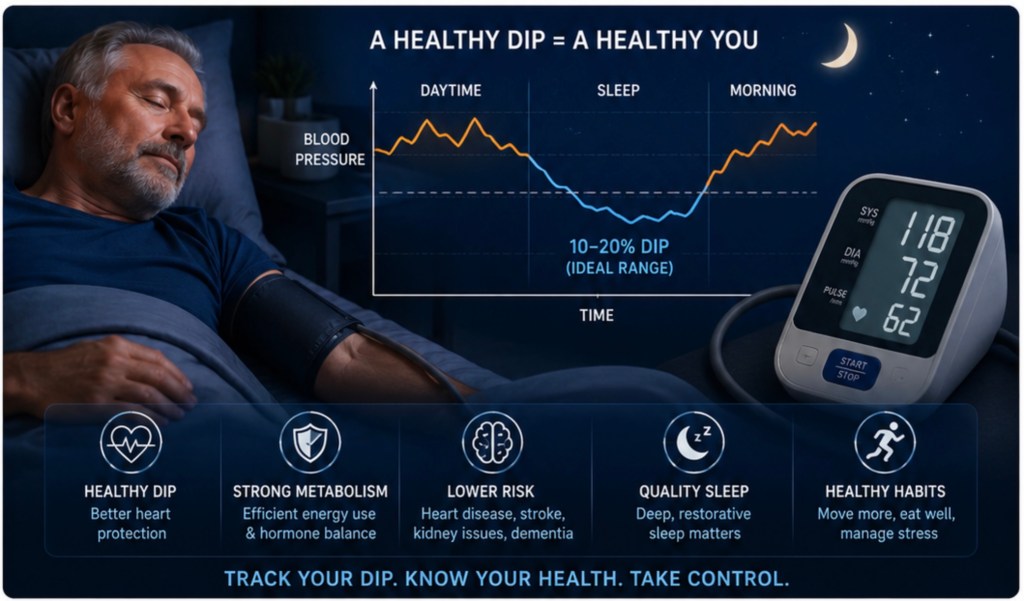
Modern technology has made monitoring this nighttime recovery easier than ever before. Wearable devices and advanced health monitors are beginning to estimate or directly measure overnight blood pressure patterns, allowing people to observe trends that once required an overnight hospital stay. Rather than focusing solely on daytime blood pressure readings taken during periods of activity or stress, tracking the overnight dip provides a broader picture of how well the body recovers when it should be at its calmest. Combined with other health metrics such as heart rate variability, resting heart rate, blood oxygen levels, and sleep quality, the blood pressure dip offers valuable insight into overall metabolic resilience.
The encouraging news is that a poor dip score is often something that can improve. Better sleep quality, treating sleep apnea, maintaining a healthy weight, exercising regularly, reducing chronic stress, limiting alcohol before bedtime, and eating a diet rich in whole, minimally processed foods can all contribute to healthier nighttime blood pressure regulation. Because these same habits also improve metabolic health, they address the underlying causes rather than simply the symptom.
Perhaps the greatest value of monitoring your nighttime blood pressure dip is that it shifts the focus from simply managing disease to measuring recovery. It reminds us that true health isn’t determined only by how our bodies perform during the day, but by how effectively they restore themselves at night. As technology continues to give us a clearer window into our sleeping physiology, the humble blood pressure dip may become one of the most valuable numbers we track—not just for cardiovascular health, but for understanding the overall state of our metabolism and long-term well-being.
FREE SCREECH .COM
Unapproved thoughts, real debate, and voices that
refuse to lower themselves to a whisper.
 Push Your Boundaries